When it comes to electrical components and applications, enameled round wire is a fundamental material that plays a crucial role. As a long – standing supplier of enameled round wire, I’ve witnessed its wide range of uses in various industries, from transformers and motors to inductors and solenoids. While most people focus on its electrical properties, such as conductivity and insulation resistance, the acoustic properties of enameled round wire are equally fascinating and can have significant implications in certain applications. Enameled Round Wire
Understanding the Basics of Enameled Round Wire
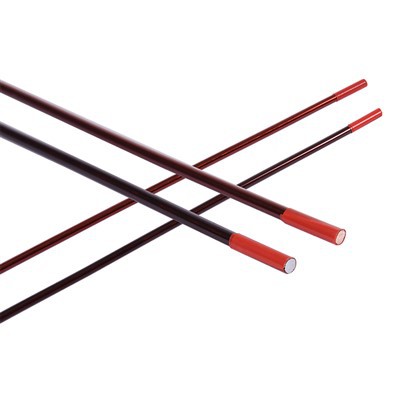
Before delving into its acoustic properties, let’s briefly review what enameled round wire is. Enameled round wire consists of a metallic conductor, typically copper or aluminum, coated with a thin layer of insulating enamel. The enamel provides electrical insulation, preventing short – circuits between adjacent turns of wire in coils. The round cross – section of the wire is not only easy to manufacture but also offers advantages in terms of packing density and mechanical stability when wound into coils.
Acoustic Properties of Enameled Round Wire
Sound Transmission
One of the key acoustic properties of enameled round wire is its ability to transmit sound. When a wire is subjected to mechanical vibrations, it can act as a waveguide for sound waves. The metallic core of the wire, being a good conductor of mechanical energy, allows sound to travel along its length. The enamel coating, on the other hand, can influence the transmission characteristics. A well – adhered and uniform enamel coating can help in maintaining the integrity of the sound wave as it travels along the wire. However, if there are any defects or unevenness in the enamel, it can cause scattering of the sound wave, leading to a loss of signal strength and possible distortion.
In some applications, such as in certain types of sensors or micro – actuators, the ability of the enameled round wire to transmit sound can be exploited. For example, in a vibration – based sensor, the wire can pick up sound vibrations from the environment and transmit them to the sensing element for processing.
Resonance
Enameled round wire can exhibit resonance behavior. Resonance occurs when the frequency of an external force matches the natural frequency of the wire. The natural frequency of a wire depends on several factors, including its length, diameter, tension, and the material properties of both the conductor and the enamel coating.
When resonance occurs, the amplitude of the wire’s vibration increases significantly. This can be both an advantage and a disadvantage. In acoustic transducers, resonance can be used to enhance the efficiency of sound generation or detection. By tuning the wire to resonate at a specific frequency, a more powerful sound signal can be produced or a weak incoming sound can be better detected. However, in some applications like high – speed motors, resonance can cause unwanted noise and vibration, which can lead to mechanical wear and reduced performance.
Damping
Damping is another important acoustic property of enameled round wire. Damping refers to the ability of a material to dissipate mechanical energy in the form of heat when it vibrates. The enamel coating on the wire can contribute to its damping characteristics. A soft and viscoelastic enamel coating can absorb some of the vibrational energy, reducing the amplitude of the wire’s vibration and the associated sound.
In applications where noise reduction is critical, such as in medical equipment or household appliances, the damping properties of the enameled round wire can be optimized. For example, by choosing an enamel with appropriate damping properties, the noise generated by the electrical components using the wire can be significantly reduced.
Factors Affecting the Acoustic Properties
Material of the Conductor
The material of the conductor has a direct impact on the acoustic properties of the enameled round wire. Copper, for instance, is a popular choice due to its high electrical conductivity and relatively good mechanical properties. It also has a relatively high density, which affects the speed of sound transmission through the wire. Aluminum, on the other hand, is lighter and less expensive, but it has a different set of acoustic characteristics. The lower density of aluminum results in a different natural frequency and sound – transmission speed compared to copper.
Enamel Coating
The enamel coating is a crucial factor in determining the acoustic properties. The thickness, hardness, and composition of the enamel can all affect how the wire behaves acoustically. A thicker enamel coating can provide more damping, but it may also increase the weight of the wire and affect its ability to transmit sound. The hardness of the enamel can influence the resonance characteristics of the wire. A harder enamel may result in a higher natural frequency, while a softer enamel may reduce the resonance frequency.
Coil Configuration
When the enameled round wire is wound into a coil, the coil configuration also affects its acoustic properties. The number of turns, the pitch between turns, and the shape of the coil can all change the way the wire vibrates and transmits sound. For example, a tightly wound coil may have different resonance characteristics compared to a loosely wound coil. The interaction between adjacent turns in a coil can also lead to complex sound – transmission patterns.
Applications Based on Acoustic Properties
Audio Equipment
In audio equipment, such as speakers and headphones, the acoustic properties of enameled round wire can play a role in the quality of sound reproduction. The wire used in the voice coils of speakers can affect the resonance and damping characteristics of the system. By carefully selecting the wire and optimizing its acoustic properties, audio manufacturers can achieve better sound clarity, reduced distortion, and improved frequency response.
Ultrasonic Devices
Ultrasonic devices, such as ultrasonic sensors and cleaners, rely on the ability of materials to generate and transmit high – frequency sound waves. Enameled round wire can be used in the construction of ultrasonic transducers. By tuning the wire’s acoustic properties to match the operating frequency of the ultrasonic device, higher efficiency and better performance can be achieved.
Acoustic Sensors
Acoustic sensors are used in a wide range of applications, from environmental monitoring to industrial inspection. Enameled round wire can be used as a sensing element in some acoustic sensors. Its ability to transmit sound and respond to mechanical vibrations can be harnessed to detect changes in the acoustic environment, such as pressure variations or the presence of certain frequencies.
Importance for Our Customers
As a supplier of enameled round wire, understanding the acoustic properties is of great significance for our customers. Different applications require different acoustic characteristics from the wire. For example, customers in the audio industry may need a wire with low distortion and a well – defined resonance frequency, while those in the ultrasonic device field may require a wire with high – frequency transmission capabilities.
We offer a wide range of enameled round wire products with different conductor materials, enamel coatings, and wire gauges. Our team of experts can work closely with customers to understand their specific acoustic requirements and recommend the most suitable wire for their applications. By providing high – quality wire with optimized acoustic properties, we can help our customers improve the performance and reliability of their products.
Why Choose Us as Your Enameled Round Wire Supplier
When it comes to selecting an enameled round wire supplier, there are several reasons why you should choose us. Firstly, we have years of experience in the industry, which has given us in – depth knowledge of the properties and applications of enameled round wire. We understand the importance of acoustic properties in various applications and can provide customized solutions to meet your specific needs.
Secondly, we have a strict quality control system in place. Every batch of our enameled round wire undergoes rigorous testing to ensure that it meets the highest standards in terms of both electrical and acoustic properties. From the selection of raw materials to the final production process, we pay close attention to every detail to guarantee the quality of our products.
Finally, we offer excellent customer service. Our team is always ready to answer your questions, provide technical support, and assist you in finding the best solution for your projects. Whether you are a small – scale manufacturer or a large – scale enterprise, we value your business and are committed to helping you succeed.
Enameled Flat Wire If you are interested in learning more about our enameled round wire products or have specific requirements regarding their acoustic properties, we encourage you to contact us for a detailed discussion. We look forward to the opportunity to work with you and contribute to the success of your projects.
References
- Jonassen, K. (2008). Handbook of Electrical and Electronic Insulating Materials. Newnes.
- Senthil Kumar, T. S., & Prabakar, R. (2011). Electrical and Electronic Insulation Technology. PHI Learning.
- Rado, G. T., & Suhir, E. (1989). Physical Acoustics In The Technology Of Integrated Circuits: Acoustic Waves In Solid State Devices. Academic Press.
Tianjin Jingwei Power Technology Co., Ltd.
As one of the most professional enameled round wire manufacturers and suppliers in China, we’re featured by quality products and good service. Please rest assured to buy durable enameled round wire made in China here from our factory. Contact us for more details.
Address: No.1 Chuangxin Rd. Xiaozhan Industrial Park, Jinnan District, Tianjin, China
E-mail: info@jwdc.cn
WebSite: https://www.jw-dcs.com/
