Let me pull back the curtain on one of the most unassuming workhorses in industrial fluid control: the floating ball valve. I’ve spent the last 12 years as a valve supplier, fielding calls from plant managers, maintenance techs, and new engineers who all ask the same core question: how does this simple-looking device keep our pipelines running smoothly, day in and day out? A few years back, I had a rookie tech show up to our warehouse, stare at a brand-new 8-inch floating ball valve, and joke that it “looks like a glorified marble in a pipe.” He wasn’t wrong about the basics—but there’s a whole lot of engineering packed into that “glorified marble” that makes floating ball valves the go-to for 60% of the on/off flow control applications we see. Today, I’m breaking down how these work, why they matter, and why you might want one (or a dozen) for your operation. Floating Ball Valve

First, let’s start with the anatomy of a floating ball valve, because you can’t understand how it works without knowing its parts. When I pull a unit off the shelf to show a client, I point to three core components: the valve body, the floating ball, and the actuation assembly. The body is the robust, cast iron or stainless steel shell that bolts into your pipeline. It’s got two pipe ends, an inlet and an outlet, and a hollow center cavity where the ball lives. That ball—yes, the “marble” everyone jokes about—isn’t a random sphere. It’s precision-machined to within thousandths of an inch, and it has a fully bored through-hole running through its equator. The size of that hole is exactly what dictates the valve’s flow capacity: a full bore ball valve has a hole the same size as the pipe, while a reduced bore has a smaller hole for lower-flow, less demanding jobs.
Then there’s the sealing system, which is where the magic (and the engineering precision) really kicks in. Around the ball, nestled into grooves inside the valve body, are two seats—usually made of PTFE (Teflon), RTFE, or sometimes metal for high-temperature applications. These seats are the unsung heroes; they create a tight, leak-proof barrier between the ball and the body, even when the line is under hundreds of PSI of pressure. And sticking out of the top of the ball is a stem, a metal rod that connects the ball to the handwheel or actuator outside the valve body. This stem is key—it transfers the turning motion from the operator to the ball without letting any fluid escape through the top of the valve, a design called stem sealing that we’ve refined over decades to meet API and ISO standards.
Now, how does it all work together to control flow? Let’s walk through the two operating states: open and closed. When the valve is open, the through-hole in the ball is aligned perfectly with the inlet and outlet of the valve body. Fluid flows straight through the unobstructed path, with minimal turbulence or pressure drop—another reason these valves are so popular for applications where you don’t want to impede flow when it’s allowed. To close the valve, you turn the handwheel clockwise (or send a signal to an electric or pneumatic actuator, which we supply pre-assembled for most clients) 90 degrees. That turn spins the ball 90 degrees, so the through-hole is now perpendicular to the pipe. The flat, un-bored part of the ball is pressed firmly against the two seats, creating a bubble-tight seal.
Wait, you might be thinking—why is it called a “floating” ball valve, if the ball doesn’t look like it’s floating? That’s the part that trips up a lot of new folks in the industry, so I’m glad to clear it up. Unlike trunnion-mounted ball valves, where the ball is held in place by metal trunnions at the top and bottom, floating ball valves don’t have those structural supports. Instead, the upstream and downstream line pressure actually pushes the ball into the downstream seat when the valve is closed. That floating action is intentional: it creates a more consistent, tighter seal because the line pressure itself adds force to the seal, rather than relying solely on the tension of the seat material. The downside? This design works best for lower to medium pressure applications, usually up to around 1500 PSI for standard models, and temperatures up to 500°F for high-temperature seat materials. If you’re working with 3000 PSI or more, you’d want a trunnion-mounted valve, but for the vast majority of use cases—water, oil, gas, chemical processing, even HVAC systems—floating ball valves are perfect.
I’ve seen this design in action across every industry, and each application teaches you a little more about why floating ball valves are so adaptable. Last year, we supplied 24 4-inch stainless steel floating ball valves to a municipal water treatment plant in the Midwest. Their old gate valves were failing every 18 months, leaking during shutdowns, and hard to operate because they required a sledgehammer to turn. The floating ball valves? They install in the same footprint, have a 90-degree quarter-turn operation so the plant techs can open or close them in seconds, and the PTFE seats hold up to chlorine and sediment without eroding. That plant hasn’t had a seal failure in over a year—something their maintenance manager told me saved them over $12,000 in unplanned downtime in the first six months.
Another common use case is for natural gas pipelines, both commercial and residential. A few months back, we worked with a regional gas utility that needed valves for a new distribution line running through a suburban development. They opted for floating ball valves because they’re lightweight enough to install on buried lines without heavy lifting equipment, and their bubble-tight seal eliminates the risk of methane leaks, which is a non-negotiable for safety and regulatory compliance. The floating design is ideal here because gas line pressures are usually between 100 and 200 PSI, right in the sweet spot for floating ball valve performance.
Of course, no piece of equipment is perfect, and it’s important to call out the limits of floating ball valves so you don’t end up with a solution that doesn’t fit your needs. As I mentioned earlier, they aren’t designed for ultra-high pressure or temperature applications. They’re also not ideal for throttling flow—while some people try to use them for that, operating a ball valve partially open will cause the ball to wear unevenly against the seats, leading to leaks over time. If you need to adjust flow rates regularly, a globe valve or a control valve is a better choice. That said, for 90% of on/off applications, floating ball valves outperform and outlast almost any other option on the market.
I’ve also spent years refining how we as a supplier approach floating ball valve selection, because one size doesn’t fit all. When a client calls, the first question I ask isn’t “how much do valves cost?” It’s “what fluid are you moving, at what pressure and temperature, and what size pipe do you need to connect to?” For a food and beverage client handling sanitized water, we recommend 316 stainless steel bodies with PTFE seats that meet FDA standards. For a chemical plant moving corrosive acids, we suggest cast iron bodies lined with PFA to prevent material degradation. For low-pressure HVAC systems, we can offer carbon steel valves that are 30% lighter and 20% cheaper than stainless steel, without sacrificing reliability.
One mistake a lot of new operators make is misinstalling the valve, which can cause unnecessary wear and failure. I always tell techs to make sure the valve is oriented correctly—flow direction doesn’t matter for most floating ball valves, but it’s important to check the manufacturer’s markings. Also, when tightening the bolts on the valve body flange, you need to tighten them in a crisscross pattern to avoid warping the body, which can throw off the seal between the ball and seats. We include a full installation guide with every valve we supply, and our team is always on call to walk clients through installation or troubleshooting, no matter how small the order.
Let’s circle back to that rookie tech’s joke about the “glorified marble.” It’s easy to dismiss floating ball valves as simple, but that simplicity is their greatest strength. They have far fewer moving parts than gate valves, globe valves, or butterfly valves—just the ball, two seats, and a stem—so there’s less to go wrong. That’s why the average floating ball valve lasts 10 to 15 years with regular maintenance, and often longer if you choose the right materials for your application.
If you’re reading this, chances are you’re in the market for reliable fluid control equipment, or you’re dealing with unexpected downtime from a faulty valve. Our team has been supplying floating ball valves to operations across North America for over a decade, and we’ve worked with everyone from small shops to large Fortune 500 plants. We stock a full range of sizes, materials, and actuation options, so we can get you the right valve for your project fast. Whether you need a single replacement valve for a maintenance shutdown or 100 valves for a new pipeline build, we can deliver on time and on budget.
Don’t take my word for it, though. Last quarter, a manufacturing plant in Texas reached out after their previous supplier delivered valves that failed pressure testing within a week. We sent them three 6-inch floating ball valves made from carbon steel with EPDM seats, tested to their exact specification of 300 PSI. They installed them, and to date, they haven’t had a single leak. The maintenance foreman sent me a text last month saying those valves are running “like a dream, no more panic calls at 2 a.m.” That’s the kind of result we pride ourselves on delivering.
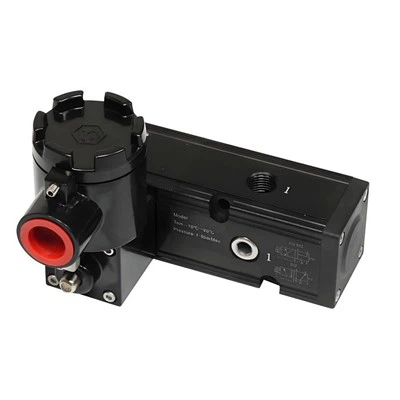
At the end of the day, floating ball valves are the unsung workhorses of industrial and commercial fluid systems. Their simple, robust design, combined with precise engineering, makes them the go-to choice for reliable on/off flow control. If you’re tired of valves that leak, require constant maintenance, or don’t hold up under your operating conditions, we can help. Reach out to our team to discuss your project, and we’ll help you select the perfect floating ball valve for your needs, with the support and reliability you can count on.
Actuator References:
Miller, J. L. (2021). Fluid Control Valves: Design, Application, and Maintenance. Industrial Press.
American Petroleum Institute. (2019). Standard 608: Metallic Ball Valves. API.
International Organization for Standardization. (2020). ISO 5211: Industrial Valves – Top Flange Dimensions for Actuation. ISO.
Wuxi PYNOS Flow-tech Co., Ltd.
As one of the leading floating ball valve manufacturers and suppliers in China, we offer a wide range of products with superior quality. We warmly welcome you to buy high quality floating ball valve made in China here from our factory. We also accept customized orders.
Address: Sales Center: 7th Floor, No.19 Qingyuan RD, Wuxi City, Jiangsu Prov., China
E-mail: Info@pynosvalve.com
WebSite: https://www.pynosvalves.com/
