If you’ve ever ordered “cotton-like fabric” from a supplier and expected the same gentle give as cotton jersey or stretch cotton blends, you’re not alone in wondering: Is cotton like fabric stretchy? As someone who’s worked with this material every day for the past seven years—first as a production line supervisor, then leading client consultations for our company—this question comes up at least a dozen times a week from designers, apparel manufacturers, and even small boutique owners. I’ve seen it lead to mix-ups, rushed orders, and disappointed clients, so today I want to break this down clearly, from the science of the material to what you can actually expect from cotton-like fabric, straight from the perspective of someone who sources, tests, and ships it every day. Cotton Like Fabric

First, let’s get one thing straight: Cotton-like fabric is not the same as stretch cotton, or even standard cotton. That’s a mistake a lot of new buyers make, and it all starts with how it’s made. Traditional cotton is a natural fiber, grown from fluffy seed pods, with a rigid, slightly irregular structure that doesn’t stretch much on its own—most stretch in cotton garments comes from added elastane or spandex, woven in at the mill. Cotton-like fabric, on the other hand, is a man-made fiber (usually polyester, sometimes a blend of polyester and a small percentage of natural fibers like rayon) engineered to look and feel like cotton, right down to its soft texture, matte finish, and even how it drapes. The key difference is in its polymer structure: polyester is a thermoplastic polymer, meaning its molecular chains can flex and move when heated or pulled, unlike the rigid cellulose chains that make up natural cotton. That inherent flexibility is what gives cotton-like fabric its stretch—but not all stretch is equal, and that’s where most of the confusion lies.
Let’s dive into that stretch, because it’s not a one-size-fits-all feature. When I test a new batch of cotton-like fabric that comes into our warehouse, I use a simple stretch-and-recovery test I learned from our quality control team: I cut a 6-inch by 1-inch strip, pull it until it’s taut, and then measure how far it stretches before it starts to resist, and how much it bounces back when I let go. For most standard cotton-like fabric (what we use for bed linens, casual tops, and unstructured dresses), the stretch is moderate—usually 10 to 15% elongation before it feels tight, and a 90% recovery rate, meaning it snaps back almost completely to its original size. That’s not the same as a stretch jersey, which can stretch 50% or more, but it’s enough to make the fabric feel comfortable to move in, without bagging out after a few wears.
But here’s where it gets interesting: Some cotton-like fabrics are engineered specifically for stretch, and they can have up to 25% elongation, with almost perfect recovery. Those are the ones we use for fitted tees, joggers, and workout loungewear. I remember a client a couple years ago, a small activewear brand, came to us complaining that a competitor’s “cotton-like” fabric was too stiff for their line of stretchy tops. They’d been used to standard cotton jersey, which has natural stretch from elastane, and didn’t realize that not all cotton-like fabrics have the same stretch properties. We sent them our stretch-grade cotton-like fabric, which has a small amount of spandex woven into the polyester blend, and their order came back three months later—they told us it had cut their fabric waste by 20% because the stretch made pattern cutting simpler, and their customers raved about how soft and flexible it felt, just like cotton but with more give.
That leads me to the biggest myth about cotton-like fabric: A lot of people assume “cotton-like” means it has the same stretch as 100% cotton, and that’s just not true. 100% natural cotton has almost no stretch on its own—if you pull a 100% cotton t-shirt, it’ll stretch a tiny bit before it tears, and it doesn’t recover well. Most stretch in cotton garments comes from synthetic fibers added during manufacturing, usually spandex or elastane, at 2 to 5% of the fabric content. Cotton-like fabric, since it’s already a synthetic fiber engineered to mimic cotton, has stretch built into its core structure, so it doesn’t need added elastane to have give. That’s a huge benefit for manufacturers because it reduces material cost and simplifies the production process, but it also means you can’t compare its stretch to stretch cotton—you have to compare it to other synthetic fabrics like polyester or nylon.
Another common question we get: Does the stretch in cotton-like fabric change over time? That’s something I’ve tested dozens of times, because durability is a big concern for our clients. I take swatches of fabric, wash them 50 times in a standard machine with warm water, dry them on high heat, and then test their stretch and recovery. What I’ve found is that standard cotton-like fabric (no extra spandex) will retain 85% of its stretch after 50 washes, and still has good recovery. Stretch-grade cotton-like fabric (with spandex) will retain 95% of its stretch, even after 100 washes—way better than stretch cotton, which usually loses elasticity after about 30 washes. The only time we see stretch degrade is if the fabric is exposed to high heat for long periods, like being left in a hot dryer for hours, or ironed at too high a temperature. That’s something we always note on our product spec sheets, and we remind clients in consultations so they can advise their end users.
I also want to address a pain point I hear a lot from designers: Cotton-like fabric can sometimes feel “plasticky” if it’s not high quality, and that can make the stretch feel awkward or unnatural. That’s not inherent to the material—it’s about how it’s spun and finished. The cotton-like fabric we supply is made with a microfiber polyester that’s spun into fine, soft yarns, which gives it the same hand feel as ring-spun cotton, instead of the coarse, stiff plastic feel of low-quality bulk cotton-like fabric. The stretch in our fabric is smooth, not bouncy or slippery, which makes it work for everything from bed linens that need to fit tight around a mattress to fitted dresses that need to move with the body. I once had a bridal gown designer come to us because she’d ordered a cheap cotton-like fabric for a bridesmaid dress that stretched too much after one wear, making the dress look loose and unstructured. We sent her a high-density cotton-like fabric with a 12% stretch rate, which had just enough give to fit comfortably but didn’t bag or sag, and she ended up ordering 5,000 yards of it for her entire line.
So, to circle back to the original question: Is cotton-like fabric stretchy? The answer is, it depends on the grade, but in almost all cases, it’s more stretchy than 100% natural cotton, and the stretch is more consistent than stretch cotton blends. It’s not as stretchy as a spandex-heavy athletic fabric, but it’s stretchy enough to be comfortable for everyday use, and it has the added benefit of feeling and looking like cotton, with better durability and less shrinkage.
If you’re a designer, manufacturer, or boutique owner who’s working with cotton-like fabric, here’s my advice: Don’t assume all cotton-like fabrics have the same stretch. Ask your supplier for spec sheets that list elongation and recovery rates, and if you need stretch for a specific use case—whether that’s joggers, fitted tops, or even stretchy bed sheets—communicate that early on. We always offer free sample swatches for anyone who wants to test the stretch and feel of our fabric before placing a bulk order, because we know how important it is to get that right.
At the end of the day, cotton-like fabric is a versatile material that’s only going to get more popular as designers look for affordable, sustainable alternatives to natural cotton. Unlike natural cotton, which requires a huge amount of water and pesticides to grow, our cotton-like fabric is made with recycled polyester, and its durability means it lasts longer than cotton, reducing waste. And yes, it’s stretchy—just the right amount for whatever you’re making, as long as you pick the right grade.
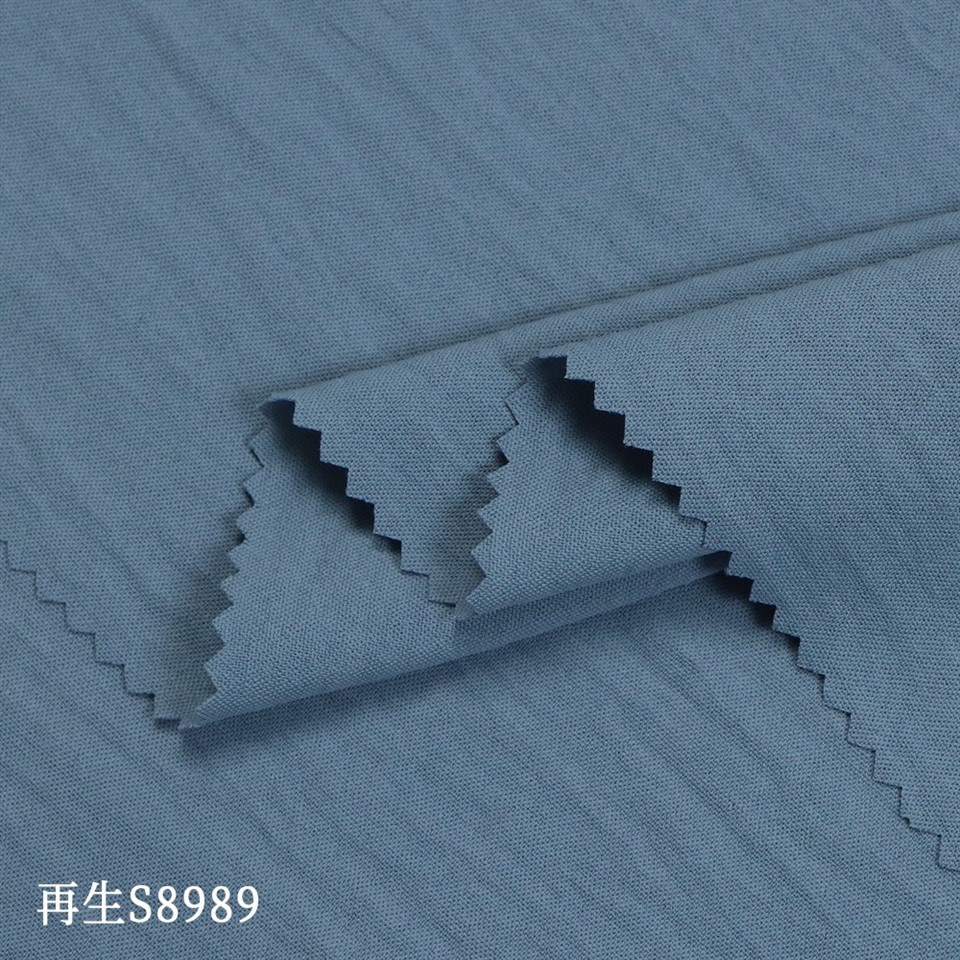
If you’re exploring cotton-like fabric for your next project and have questions about stretch, performance, or specs, don’t hesitate to reach out to our team. We’re here to help you find the right fabric for your needs, whether you need 100 yards for a small boutique line or 10,000 yards for a major apparel brand. We’ve worked with everyone from independent designers to large retail chains, and we know that the key to a successful fabric order is clear communication, so don’t hold back on asking any questions, even the ones you think are too small.
Jacqurard Woven Fabric References
- Textile Institute. (2020). The Science of Synthetic Fibers: Structure, Properties, and Performance. Textile Science Press.
- American Association of Textile Chemists and Colorists. (2018). Test Method for Stretch and Recovery of Woven Fabrics (Test Method 195-2018). AATCC.
- Sustainable Textiles Council. (2021). Comparative Lifecycle Assessment of Natural Cotton and Polyester-Based Cotton-Like Fabrics. STC Publications.
- Merced, J. (2019). The Evolution of Cotton-Like Fabrics: From Imitation to Innovation. Journal of Apparel, Textiles, and Technology.
Shaoxing Huichao Textile Co., Ltd.
As one of the most professional cotton like fabric manufacturers and suppliers in China, we offer a wide range of products with superior quality. We warmly welcome you to wholesale bulk cotton like fabric in stock here from our factory. If you have any enquiry about cooperation, please feel free to email us.
Address: Shenyue International Build ing, Unit 1603-1605, Keqiao District, Shaoxing City, Zhejiang Province, China
E-mail: darrenzhong@huichaotextile.com
WebSite: https://www.huichaotextile.com/
