If you’ve ever stood on a construction site watching a jackhammer position perfectly aligned steel rebar for a bridge pier, or stared at a robotics lab where a robotic arm twists a tiny medical implant with sub-millimeter accuracy, you’ve probably witnessed the quiet power of a servo hydraulic cylinder. As someone who’s spent the last 12 years building, testing, and refining these actuators for industrial and automation clients, I get asked one question more than any other: how do these heavy-duty, oil-powered components pull off that kind of precision? It’s not magic—it’s a carefully tuned dance between hydraulics, electronics, and a feedback loop that fixes even the tiniest misstep before it becomes a problem. Let me walk you through how it works, straight from the workbench where we build ours every day. Servo Hydraulic Cylinder
First, let’s bust a common myth right away: servo hydraulic cylinders aren’t just “regular hydraulic cylinders with a fancy label.” A standard hydraulic cylinder works by pushing pressurized oil into one side of a hollow metal piston, which extends or retracts the rod at the end. That’s great for brute force—lifting 50 tons of excavator bucket, for example—but it has zero built-in accuracy. If you want to stop that rod exactly 2.3 inches from its starting point, you’re guessing with a valve and crossing your fingers. Servo hydraulic cylinders, though, are designed from the inside out for control, not just force. Every part of them is engineered to cut down on slack, dead zones, and lag—the tiny delays that make precision impossible.
Let’s start with the core mechanical part: the cylinder itself. A few years back, we switched from cast iron piston barrels to precision-honed, seamless steel tubes, and it made a night and day difference. Cast iron has micro-roughness that causes the piston to drag slightly, like a car with a warped wheel bearing. Honed seamless steel has a surface so smooth, the clearance between the piston and the barrel is less than a human hair. That doesn’t just reduce wear—it eliminates “crawl,” that slow, jerky movement that happens when oil leaks around the piston. We also use high-grade, cross-hatched piston rings that seal better than standard rings, holding pressure steady even when the cylinder is holding a load for hours. No more drift—where the rod slowly slips out of position because of pressure leaks.
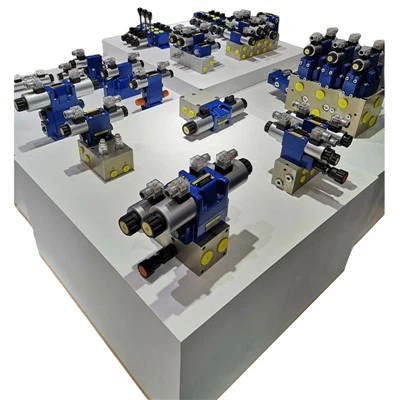
But the hydraulic part only gets you so far. The real precision muscle comes from the valve that controls the oil flow: a servo proportional valve. Here’s where I can get specific about how ours works. Unlike a standard hydraulic valve that’s either fully open or fully shut, a servo proportional valve uses a tiny, electrically controlled spool that moves in fractions of a millimeter. When the system wants the cylinder to extend at 10 mm per second, the spool moves just enough to let only that exact amount of pressurized oil flow into the cylinder head. If it needs to speed up, the spool shifts a tiny bit more; if it needs to slow down, it pulls back. A lot of cheaper hydraulic setups use a “on-off” valve and rely on flow regulators, but those are like using a garden hose to water a seed—you can’t fine-tune the amount of water. The servo proportional valve is like a drip irrigation system, delivering exactly the right volume of oil, exactly when it’s needed.
Wait, but how does the valve know when to shift? That’s the feedback loop, the brain of the whole operation. Every servo hydraulic cylinder we build has two types of sensors built right in, and they work together like a pair of eyes watching the rod. The first is a linear position transducer mounted inside the cylinder rod—no external parts, so it’s protected from dust, debris, and rough treatment, which is a huge deal for our clients in construction and mining. This sensor tracks the exact position of the rod 1,000 times every second, sending a real-time number back to the controller. Let’s say the system tells the cylinder to move to 150 mm from the starting point, and the transducer reads 149.9 mm half a second later. The controller doesn’t wait for an error to get bigger—it sends a tiny signal to the servo valve to push just a little more oil, closing that 0.1 mm gap before it matters.
The second sensor is for force, not position. Some applications don’t care how far the rod moves—they care how much pressure it applies. Think about a press that shapes car body panels: apply 10 tons of pressure, stop, hold it for 2 seconds, then release. Our force sensors, mounted between the piston and the rod, measure how much force the cylinder is exerting with every movement. If the press starts applying 10.1 tons by accident, the controller adjusts the oil flow immediately, bringing it back to exactly 10 tons. Most entry-level hydraulic systems have no force feedback at all—they just guess based on oil pressure, which can be off by 5% or more. Our sensors cut that error to 0.5% or less, which is non-negotiable for clients in aerospace and medical device manufacturing, where a misaligned part can ruin a $10,000 component or cause safety issues.
Let’s talk about the controller, because even the best cylinder and sensor are useless without a brain to tie them together. We use custom-programmed motion controllers that are specifically tuned for servo hydraulic systems, not generic industrial controllers. Generic controllers are built for electric motors, which have instant, linear response—hydraulics have lag. When you open a valve, it takes a split second for the oil to move through the lines, and a tiny bit longer for the piston to start moving. If the controller’s response is too fast, it will overcorrect—push too much oil, make the rod move too far, then overcorrect the other way, causing a wobbly, unstable movement. If it’s too slow, the error gets bigger. We spend hours calibrating each controller for every application, adjusting the “gain” settings to match the cylinder’s size, the length of the hydraulic lines, and the load it will be moving. For example, a servo cylinder on a robotic arm that moves 10 kg of precision parts has different gain settings than one on a mining robot that moves 2 tons of rock. There’s no one-size-fits-all here, which is why we don’t sell off-the-shelf units—every system we ship is adjusted to the client’s exact needs.
I’ve seen first-hand what happens when this whole system works as it should. Last year, we built a set of 8 servo hydraulic cylinders for a wind turbine blade manufacturer. The factory was using old hydraulic cylinders that were off by 3 mm when drilling holes in the carbon fiber blades—enough that some holes wouldn’t line up with the root assembly, requiring hours of rework and wasting expensive material. We installed our system, and the error dropped to less than 0.1 mm. That meant no rework, less scrap, and the manufacturer could increase their daily production by 12% because they didn’t have to stop to fix misaligned holes. Another client, a medical device maker, used our cylinders to press titanium hip implants into their final shape. Before, they were applying inconsistent pressure, leading to a 2% failure rate. After switching, that rate dropped to 0.1%, saving them hundreds of thousands of dollars in returns and warranty claims.
But here’s the thing: servo hydraulic cylinders aren’t just for high-tech industries. We’ve sold them to a woodworking company that cuts custom furniture parts with perfect accuracy, to a food processing plant that folds packaging material without tearing it, and even to a farm equipment maker that adjusts the height of combine harvester headers to avoid damaging crops. The common thread across all these applications is that they need precision, but they also need the brute force that only hydraulics can provide. Electric actuators can have that same fine control, but try lifting 50 tons with an electric actuator—you’re looking at a unit that’s the size of a shipping container and costs three times as much as a servo hydraulic cylinder.
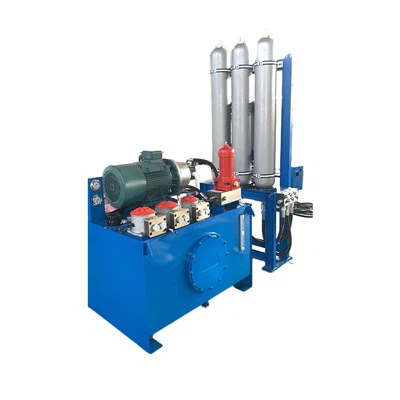
I know that for people who don’t work with these components every day, the difference between a regular cylinder and a servo one can feel small. But to the clients who rely on us, it’s the difference between meeting a deadline and missing it, between making a profit and taking a loss, between a safe product and one that could fail. That’s why we don’t cut corners on materials, on calibration, on testing. Every servo hydraulic cylinder that leaves our facility gets a 24-hour performance test, moving it through its full range of motion hundreds of times, checking position and force accuracy at every step. We test it at -20°C and 60°C, because a cylinder that works fine in a 20°C office might drift in a hot construction yard or slow down in a cold warehouse.
Hydraulic System If you’re reading this and wondering if a servo hydraulic cylinder is right for your operation—whether you’re looking to reduce scrap, increase production, or improve the accuracy of your machinery—we’d love to walk you through how our systems work for your specific needs. We don’t push a one-size-fits-all solution; we talk through your challenges, explain how our components can solve them, and work with you to build a system that fits your budget and your goals. Whether you need a single cylinder for a small machine or a set of 50 for a large-scale automation line, we have the experience to deliver precision you can count on.
References
- Hydraulic Control Systems, S.A. Mckenzie, CRC Press, 2019
- Precision Motion Control: Theory and Practice, J. H. Park, Springer, 2021
- Industrial Actuators and Control Systems, R. W. Bolton, Newnes, 2018
- Linear Position Sensors for Industrial Applications, International Society of Automation, 2020
- Servo Hydraulic Systems: Design and Tuning, E. J. Beach, Industrial Press, 2017
Wuhu Zhongye Fluid Equipment Co., Ltd.
We are one of the most experienced servo hydraulic cylinder manufacturers and suppliers in China, specialized in providing high quality customized products. Please feel free to wholesale bulk durable servo hydraulic cylinder in stock here from our factory. Contact us for quotation.
Address: No. 2, Hexing Road, Sanshan District, Wuhu City, Anhui Province
E-mail: zhongyehydro20@163.com
WebSite: https://www.zhongyehydro.com/
