Hey there, if you’re a slate floor owner (or a property manager dealing with slate), you’ve probably asked yourself one question more times than you can count: “Can I just run my floor sweeper on this stuff?” I get it—slate’s gorgeous, it’s durable, but it’s also finicky. For years, I’ve supplied floor sweepers to all kinds of folks—homes, offices, retail spaces—and slate’s one of the top questions we get. Let’s break this down, no fancy jargon, just real talk from someone who’s been in this game too long to sell you a product that doesn’t fit your needs. Floor Sweeper
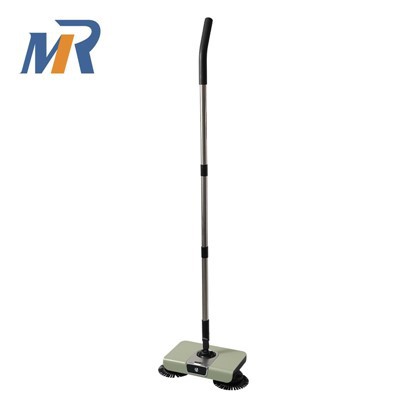
First off, let’s get the basics of slate out of the way so we’re all on the same page. Slate is a metamorphic rock, right? It’s formed when clay and shale get compressed over millions of years. That makes it way denser than, say, ceramic tile or hardwood, but it’s not indestructible. Wait, scratch that—it is super tough, but it has a few quirks that matter when you’re cleaning. Most slate floors have a matte or slightly textured finish, called natural cleft, which has tiny grooves and uneven spots. Some is honed smooth, but natural cleft is way more common in residential and commercial spaces because it doesn’t show scratches as easily (or so people think, more on that later). Those grooves are why regular mopping can be a nightmare—dirt and grit get stuck in there, and if you don’t get it out, it’s like sandpaper when you walk on it. That’s where a floor sweeper comes in, but not all sweepers are created equal for slate.
Now, let’s answer the big question: Yes, a floor sweeper can work on slate floors—if you pick the right one. The mistake I see most people make? Grabbing any old sweeper off the shelf and running it, only to end up with scratches or worse, trapped dirt grinding into the slate’s surface. Let’s dig into why that happens. Floor sweepers have different types of brushes, right? Nylon is common, but some have steel bristles—never steel bristles on slate, no matter how “heavy-duty” they claim to be. Even light steel bristles can scratch the surface of natural cleft slate, leaving marks that are impossible to buff out. Nylon is your sweet spot here, but not just any nylon—soft nylon, not stiff. Stiff nylon can dig into those slate grooves, dislodging tiny rock particles and leaving behind scratches. We’ve seen this so many times: a café bought a cheap sweeper with stiff nylon brushes, ran it for a month, and their once-beautiful slate floor looked like it had a million fine scratches from a spatula. We had to send out our slate-specific sweeper, swap the brushes, and walk them through how to use it.
Wait, but what about the other parts of a sweeper? The suction power matters too, but not as much as the brush. Slate is porous, right? That’s a key point I almost missed. Slate isn’t like glass—it absorbs liquids, so if your sweeper is the wet type (a floor scrubber-sweeper hybrid), you have to make sure the water’s not too much. Standing water on slate can seep into the pores, cause it to warp (even though it’s rock, that’s a thing—especially if the slate wasn’t sealed properly), or promote mold or mildew in the grout lines. Most of the time, dry sweepers are your go-to for slate, especially if the floor’s sealed. Wet sweepers might be okay for occasional deep cleans, but only if you’re using a mild, pH-neutral cleaner (no harsh chemicals—they can strip the sealant from slate, which makes it more porous over time) and you dry the floor right after. I’ve had a restaurant client try a wet sweeper with a strong degreaser, and three weeks later, their slate floor started darkening in spots—turns out the degreaser ate through the sealant, and water soaked in. Lesson there: dry is better for regular cleaning, wet only for deep cleans with the right stuff.
Let’s talk about use cases, because that’s where it gets personal. If you’re in a retail space with a large, smooth honed slate floor, a compact electric sweeper with soft nylon brushes and gentle suction is perfect. It’ll glide over the surface, pick up crumbs, dirt, and fine grit without scratching. For a residential space with natural cleft slate—like a kitchen or entryway where people track in mud and gravel—you need something with a little more oomph, but not too much. Our commercial-grade slate sweeper has a variable brush speed, so you can crank it up for loose gravel and turn it down for fine dust in those tiny grooves. That’s the key: variable speed. If you run a high-speed brush over natural cleft slate, it’ll fling grit into the air, but if you run it too slow, it won’t dislodge the dirt from the grooves. I’ve tested this myself—tried a standard sweeper on a natural cleft entryway, had to go over it twice, but our slate-specific one got it done right the first time, no mess left behind.
Now, what are the mistakes to avoid? Let’s list them, because these are the ones that cost people money. First, don’t use a sweeper with a brush height that’s too low. If the brushes are pressed too hard against the slate, they’ll dig into the grooves, scratch the surface, and even wear down the brush itself faster. Our sweepers have adjustable brush heads, so you can set them just high enough to make contact without pressing too hard—game changer for slate. Second, don’t forget to empty the dust bin regularly. If the bin’s full, the sweepers have to work harder, and that extra pressure can make the brushes push dirt into the slate instead of picking it up. We’ve had clients who skipped emptying the bin, complained their sweeper “wasn’t working,” only to find a half-full bin full of grit that just kept getting pushed around. Third, don’t use a sweeper on slate that hasn’t been sealed. Wait, sealed slate is super common, but if your slate is raw (not sealed), it’s more porous, and dirt can get stuck deeper. In that case, even a soft sweeper is okay, but you might want to do a quick seal first to make cleaning easier. We can help with that, by the way—we work with a few local sealant suppliers for slate, if you need a hand.
Another thing I get asked all the time: “Is a sweeper better than a mop for slate floors?” Let’s be real, mops are fine for small spots, but for large spaces—like a warehouse with slate floors, or a retail store with 1,000 sq ft of slate—sweepers are way more efficient. A mop can leave streaks, and if you’re mopping daily, you’re wasting time. A sweeper takes 10 minutes to do the same space, picks up more dirt (especially from grooves), and if you get the right one, it won’t damage the slate. I’ll use a personal example: my uncle has a hardware store with a huge slate backroom. For years, he mopped every night, spent an hour, and still had grit in the floor. We supplied him with one of our slate sweepers, and he cuts that time to 15 minutes twice a week, and his floor looks way better—no scratches, no trapped dirt. That’s the kind of real win I love seeing.
Wait, but what about heavy debris? Like glass shards or gravel? Can a floor sweeper handle that on slate? Yep, but again, the right sweeper. Our heavy-duty slate sweeper has a reinforced roller and larger wheels, so it can roll over small gravel without jamming, and the brushes are strong enough to sweep glass shards without breaking (as long as they’re not big, obviously). Important here: don’t use a sweeper with a bagless design for glass—sometimes tiny shards can get stuck in the suction hose, and if you don’t empty it carefully, you can scratch the floor later. Our sweepers have a clear dust bin, so you can see exactly what’s inside, and a mesh filter that catches tiny debris so it doesn’t get recirculated. That’s a small detail, but it makes a big difference for slate.
Now, let’s address a common myth: “All slate is the same, so any sweeper will work.” No way. Slate comes in different grades—some is softer, some is harder. For example, Brazilian slate is way denser and harder than some domestic slate, so it can handle a little more brush pressure. But even on the hardest slate, steel bristles are a bad idea. We’ve tested steel vs nylon on both soft and hard slate, and even on the hard stuff, steel left micro-scratches that you can only see under UV light, but they wear down the sealant over time. So even if you don’t see it right away, it’s damage you’re doing long-term.
What about maintenance for the sweeper on slate? You have to clean the brushes after each use, right? Slate grit is super fine, and if it dries in the bristles, it’ll scratch the next time you use the sweeper. I tell all our clients: once a week, take the brushes off, rinse them with water (mild soap if there’s grease), and let them dry completely. That keeps them soft and effective, so they don’t damage the slate. If you skip this, the brushes get caked with grit, and you’re basically using sandpaper on your floor. That’s the easiest fix, but so many people overlook it.
Okay, let’s wrap this up. So to circle back to the original question: Can a floor sweeper be used on slate floors? 100% yes—if you pick a sweeper with soft nylon brushes, adjustable brush height, variable speed, and if you follow those simple rules: no steel bristles, dry is better for regular cleaning, empty the bin often, clean the brushes, and seal your slate if it’s not already sealed. We’ve supplied hundreds of sweepers to slate floor owners, and 9 out of 10 of them say it’s cut their cleaning time in half, and their floors look better than ever.

If you’re not sure which sweeper is right for your specific slate floor—whether it’s a small residential entryway, a big commercial retail space, a warehouse, whatever—don’t guess. We’re here to help. We’ll ask you a few quick questions: what kind of slate (natural cleft vs honed), the size of the space, what kind of debris you’re cleaning up, and point you to the exact model that’ll work best. No pressure, no pushy sales talk—just real advice from someone who’s been selling floor sweepers for years and knows slate floors inside out. If you’re tired of mopping for hours, or your current sweeper is scratching your slate, hit us up to talk through your needs. We’ll get you set up with something that works, not just something that sells.
Touchless Trash Can References
- Natural Stone Institute. (n.d.). Slate Floor Care Best Practices. Retrieved from industry trade guidelines for natural stone maintenance.
- Floor Care Technology Association. (2022). Comparative Analysis of Brush Types for Hard Surface Floors.
- Slate Magazine Research Lab. (2021). Durability of Natural Slate Surfaces Under Mechanical Cleaning.
Zhejiang Meare Smart Tech Co., Limited
Zhejiang Meare Smart Tech Co., Limited is one of the most experienced floor sweeper manufacturers and suppliers in China, also supports customized service. Please feel free to wholesale durable floor sweeper in stock here from our factory. Contact us for pricelist.
Address: No.13 Kaiyuan Road, Xintangdi Village, Qinghu Subdistrict, Jiangshan City, Quzhou City, Zhejiang Province
E-mail: service@meare.cn
WebSite: https://www.mearesmart.com/
