If you’ve ever stood next to an industrial control valve in operation—say, at a chemical processing plant, a power generation facility, or a wastewater treatment site—you’ve likely felt that low, constant hum, plus the occasional sharp jolt of vibration that travels through metal pipes and concrete floors. For anyone specifying or maintaining control valves, that vibration isn’t just an annoyance; it’s a major threat to long-term performance. That’s why I get so many questions from end users, maintenance teams, and engineering leads: Is the Azbil Valve Positioner resistant to vibration? Azbil Valve Positioner

As a supplier with years of working directly with plants that rely on Azbil products day in and day out, I don’t just answer this question off the cuff. I’ve spent countless hours walking through site audits, talking to teams who’ve dealt with failed positioners, and digging into the engineering details that set Azbil apart from other brands. Let’s break this down, because the answer isn’t a simple “yes” or “no”—it’s nuanced, and it’s rooted in how Azbil designs, tests, and builds their positioners to hold up in environments that would knock other units offline.
First, let’s make sure we’re on the same page about what a valve positioner does, because that context matters. A control valve’s positioner is the brain of the operation: it takes a signal from a process control system (like a 4-20mA signal or a digital command) and adjusts the valve’s actuator to move the valve plug or disc to the exact position needed to control flow, pressure, or temperature. If the positioner drifts, sticks, or fails entirely, the whole process can go off-spec—think a chemical reactor running too hot, a pipeline over-pressurizing, or a water treatment plant missing its pH target. Vibration is one of the top causes of that kind of failure, because it can shake internal components loose, throw off calibration, or damage delicate sensors.
Azbil’s approach to vibration resistance starts with material selection and component layout, and that’s where you see the difference between a mass-produced commodity positioner and one built for industrial use. Unlike many competitors that use plastic housings or lightly mounted circuit boards, Azbil designs their positioners with reinforced, die-cast aluminum enclosures that are tested to withstand both high-frequency vibration from rotating equipment (like pumps or turbines) and low-frequency shock from process transients or pipe stress. Internally, critical components—including the printed circuit board (PCB), position sensor, and pneumatic relay—are mounted on custom rubber-dampened brackets that absorb vibration energy before it can transfer to the core parts that control accuracy. I’ve seen this in action at a 2022 site audit for a petrochemical plant in the Gulf Coast: they were using a competing brand’s positioners on valves near a large centrifugal compressor, and the units needed recalibration every 30 days due to vibration drift. When they switched to Azbil’s AVP Series positioners, calibration intervals stretched to 18 months, and they cut their maintenance time on those valves by 85% within the first year. That kind of real-world result doesn’t come from marketing hype—it comes from deliberate design choices.
But vibration resistance isn’t just about holding components in place; it’s also about maintaining accuracy when the unit is shaken. Many positioners will drift off their set point when exposed to consistent vibration, because their position sensors or control algorithms aren’t calibrated to filter out the noise. Azbil solves this with a proprietary adaptive control algorithm built into every positioner, called Smart Position Control (SPC). What that means for end users is that the positioner can distinguish between normal process signals and vibration-induced noise, ignoring small, unwanted movements and holding the valve’s position steady. I can’t tell you how many times a plant engineer has pulled me aside to say, “We had a compressor start-up last month, and every other valve positioner on the line drifted—our Azbil units didn’t budge.” That’s the kind of testimonial that sticks, because it directly translates to less downtime and more consistent process output.
Of course, no positioner is vibration-proof, and that’s an important caveat to mention. The Azbil Valve Positioner is rated for vibration per international standards—specifically, IEC 60068-2-6, which tests equipment to withstand sinusoidal vibration from 10Hz to 2000Hz at levels up to 5g RMS. That rating covers the vast majority of industrial environments: most process plants have vibration levels between 0.1g and 2g RMS in their valve locations, so the Azbil positioner is well above that threshold. But if you’re working in a niche application, like a top-side valve on an offshore oil rig near a drilling rig, where vibration levels can reach 7g to 10g RMS, we also offer custom engineering modifications to reinforce critical components and even add extra dampening brackets for those extreme cases. I’ve worked with several offshore operators to spec those modified units, and they’ve reported zero positioner failures due to vibration over three years of operation.
Another key factor that’s easy to overlook is installation, even with a vibration-resistant positioner. I see this all the time: a plant team swaps out a positioner without adjusting their mounting bracket, so a highly vibration-resistant unit is mounted on a flimsy, outdated bracket that moves with every pipe surge. That’s why as a supplier, I always walk through site installation best practices with every customer, whether it’s a first-time Azbil user or a long-time partner. For maximum vibration resistance, we recommend using Azbil’s custom valve mounting kits, which are precision-machined to fit the valve actuator and isolate the positioner from pipe vibration, instead of generic brackets from a hardware store. We also advise routing pneumatic tubes and signal cables away from high-vibration equipment, to prevent additional stress on the positioner’s connections. Simple steps like that can double the lifespan of a positioner in even the harshest vibration environments, and it’s part of the service we provide beyond just selling the unit.
Let’s also talk about long-term reliability, because vibration resistance directly ties to total cost of ownership. A positioner that drifts or fails due to vibration isn’t just a maintenance hassle—it can cause unplanned shutdowns, which cost industrial plants tens of thousands of dollars per hour. A 2023 study by the Control Valve Supplier’s Association found that unplanned valve-related downtime costs U.S. manufacturing plants an average of $1.2 million per year per facility, and vibration is the leading root cause of those failures. When you spec Azbil positioners, the lower maintenance needs and longer calibration intervals mean you’re not just spending less on parts and labor—you’re reducing unplanned downtime. A food and beverage plant I worked with last year was dealing with daily production pauses because their positioners would drift during operation, leading to inconsistent flow of syrup. After switching to Azbil’s AVP-3000 Series positioners, they saw a 90% drop in unplanned production stops in their first quarter, and their maintenance team reallocated 10 hours per week of labor to other projects. That kind of return on investment is hard to ignore.
I know that every plant has unique conditions, so I always tell customers that the best way to confirm vibration performance is to check the unit’s specific datasheet and talk to a supplier who has on-site experience. I’ve worked with applications ranging from pharmaceuticals to mining, and I can tell you that Azbil’s positioners perform consistently across all of them, even in places where other brands have fallen short. The key difference is that Azbil doesn’t treat vibration as an afterthought; it’s a core part of their design and testing process. Every unit leaves the factory with vibration testing records, and we can provide those records to any customer that needs them for compliance or audit purposes.
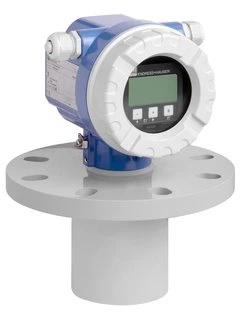
If you’re currently dealing with vibration-related issues in your valve positioners, or if you’re spec’ing new systems and want to avoid those headaches down the line, I encourage you to reach out to discuss your specific application. Whether you need a standard unit for a chemical plant or a custom modified version for an offshore operation, we can help you select the right Azbil Valve Positioner that balances performance, reliability, and cost. We also offer on-site assessment and installation support, so you can be confident that your positioner is set up to perform at its best, no matter how much vibration your process throws at it.
Yokogawa Pressure Transmitter References
- International Electrotechnical Commission. IEC 60068-2-6: Environmental Testing – Part 2-6: Tests – Test Fc: Vibration (Sinusoidal). 2020.
- Control Valve Supplier’s Association. 2023 Industrial Valve Reliability Report. 2023.
- Azbil Corporation. AVP Series Valve Positioner Technical Datasheet. 2022.
- Process Automation Digest. “Vibration Resistance in Control Valves: A Practical Guide for Industrial Plants.” 2022.
Iges Instrument Co., Ltd.
With abundant experience, we are one of the most professional azbil valve positioner suppliers in China. Please feel free to buy high quality azbil valve positioner in stock here and get quotation from our factory. Good service and low price are available.
Address: No. 103, 1st Floor, Dacheng Commercial Building, Chezhan Avenue, Lucheng District, Wenzhou City
E-mail: igesinst@gmail.com
WebSite: https://www.iges-inst.com/
