As a supplier of Low Profile Raised Access Floors, I’ve had numerous conversations with data center operators, IT managers, and facility planners about the suitability of our product for their critical environments. In this blog post, I’ll delve into the key considerations and benefits of using a low profile raised access floor in data centers, sharing insights based on my experience in the industry. Low Profile Raised Access Floor
Understanding Low Profile Raised Access Floors
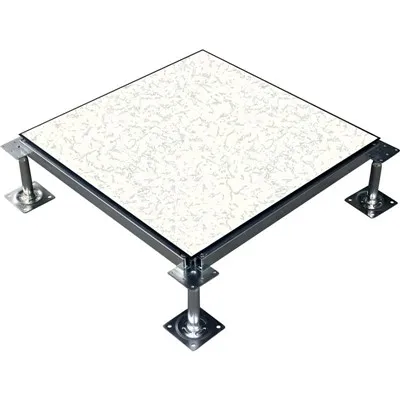
A low profile raised access floor, as the name suggests, is a type of flooring system that provides a small elevation above the subfloor, typically ranging from 2 to 6 inches. This is in contrast to traditional raised access floors, which can have a clearance of 12 inches or more. The primary purpose of a raised access floor, whether low profile or standard, is to create a plenum space for the distribution of power, data cables, and HVAC (heating, ventilation, and air conditioning) systems.
Benefits of Low Profile Raised Access Floors in Data Centers
Space Efficiency
One of the most significant advantages of a low profile raised access floor in data centers is its ability to save vertical space. In modern data centers, where real estate is at a premium, every inch of vertical space counts. By using a low profile floor, data center operators can maximize the available height for equipment racks, servers, and other critical infrastructure. This is particularly beneficial in multi – story data centers or facilities with height restrictions.
For example, in a data center with a limited ceiling height, a low profile raised access floor allows for taller equipment racks to be installed, increasing the overall computing capacity of the facility without the need for costly building expansions.
Cost – Effectiveness
Low profile raised access floors are generally more cost – effective than traditional raised access floors. The reduced height means less material is required for the floor structure, resulting in lower material costs. Additionally, the installation of a low profile floor is often quicker and simpler, reducing labor costs.
Moreover, the lower plenum height of a low profile floor can lead to energy savings. Since there is less volume of air to condition in the plenum space, the HVAC system can operate more efficiently, reducing energy consumption and utility bills over the long term.
Cable Management
Effective cable management is crucial in data centers to ensure reliable operation and easy maintenance. Low profile raised access floors provide an organized way to route power and data cables. The shallow plenum space allows for shorter cable runs, minimizing the risk of cable interference and signal loss.
Furthermore, the accessibility of the low profile floor makes it easier for technicians to install, repair, and reconfigure cables as needed. This reduces downtime during maintenance and upgrades, ensuring the continuous operation of the data center.
Flexibility and Scalability
Data centers are highly dynamic environments that often require frequent equipment upgrades and expansions. Low profile raised access floors offer greater flexibility and scalability compared to traditional ones. They can be easily modified or extended to accommodate new equipment and changing cabling requirements.
For instance, if a data center needs to add more servers or replace existing equipment, the low profile floor can be quickly adjusted to provide the necessary space for cable rerouting and power distribution.
Challenges and Considerations
While low profile raised access floors offer many benefits, there are also some challenges and considerations that data center operators need to take into account.
Airflow Management
The reduced plenum height of a low profile raised access floor can pose challenges for airflow management. In data centers, proper airflow is essential to cool the servers and prevent overheating. With a smaller plenum space, it can be more difficult to achieve uniform airflow distribution.
However, this challenge can be overcome with proper design and engineering. For example, using high – performance airflow tiles, strategic placement of air vents, and advanced HVAC systems can help ensure adequate cooling in a data center with a low profile raised access floor.
Load – Bearing Capacity
Data centers house a large amount of heavy equipment, such as servers, storage arrays, and power distribution units. Therefore, the load – bearing capacity of the raised access floor is a critical consideration. Low profile raised access floors need to be designed to support the weight of the equipment without sagging or failing.
As a supplier, we offer low profile floors with different load – bearing ratings to meet the specific needs of data centers. Our engineering team can work closely with data center operators to determine the appropriate floor system based on the equipment layout and weight distribution.
Case Studies
To illustrate the effectiveness of low profile raised access floors in data centers, let’s look at a few case studies.
Case Study 1: A Mid – Sized Data Center
A mid – sized data center was facing space constraints due to its limited ceiling height. The operators decided to install a low profile raised access floor to maximize the available vertical space. After the installation, they were able to increase the height of their equipment racks by 20%, significantly increasing the computing capacity of the facility. Additionally, the reduced plenum height led to a 15% reduction in energy consumption for the HVAC system.
Case Study 2: A New Data Center Build
A new data center was being built from the ground up. The design team chose a low profile raised access floor for its cost – effectiveness and flexibility. During the construction phase, the quick and easy installation of the floor saved both time and money. As the data center expanded over time, the low profile floor was easily modified to accommodate new equipment and cabling requirements, ensuring seamless scalability.
Conclusion
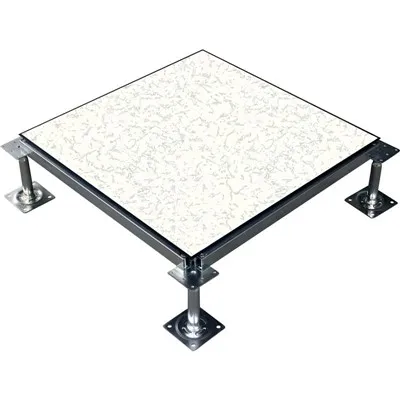
In conclusion, low profile raised access floors are a suitable option for many data centers. They offer significant benefits in terms of space efficiency, cost – effectiveness, cable management, and flexibility. While there are some challenges, such as airflow management and load – bearing capacity, these can be effectively addressed through proper design and engineering.
Steel Raised Acess Flooring If you’re a data center operator, IT manager, or facility planner considering a raised access floor for your facility, I encourage you to explore the benefits of a low profile raised access floor. Our team of experts is available to answer your questions, provide detailed product information, and work with you to design the ideal flooring solution for your data center. Contact us to start a conversation about your specific requirements and how our low profile raised access floors can meet your needs.
References
- "Data Center Design and Implementation Best Practices" by Andrew S. Tanenbaum
- "Raised Access Floors: A Comprehensive Guide" by the National Flooring Manufacturers Association
- Industry whitepapers on data center infrastructure and raised access floor technologies
Fineco Tech Co., Ltd.
As one of the most professional low profile raised access floor manufacturers and suppliers in China, we’re featured by quality products and good service. Welcome to wholesale customized low profile raised access floor made in China here from our factory. If you have any enquiry about cooperation, please feel free to email us.
Address: Wuyue Square, Wujin District, Changzhou, Jiangsu, China
E-mail: info@finecotech.com
WebSite: https://www.finecoglobal.com/
