Platinum titanium anodes are widely used in various electrochemical applications due to their excellent corrosion resistance, high catalytic activity, and long – service life. As a supplier of platinum titanium anodes, I have been closely observing the research trends in this field. In this blog, I will explore the latest research directions and their potential impacts on the industry. Platinum Titanium Anode
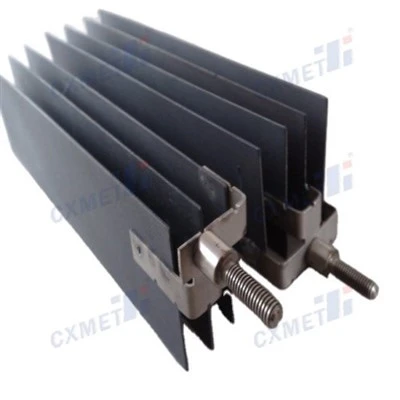
1. Enhancement of Catalytic Activity
One of the primary research trends for platinum titanium anodes is the enhancement of catalytic activity. In many electrochemical processes, such as water electrolysis for hydrogen production, the efficiency of the reaction largely depends on the catalytic performance of the anode.
Researchers are exploring different ways to modify the surface of platinum titanium anodes to increase the number of active sites. For example, some studies use nanotechnology to fabricate platinum nanoparticles on the titanium substrate. These nanoparticles have a large surface – to – volume ratio, which can provide more active sites for electrochemical reactions. By controlling the size, shape, and distribution of the platinum nanoparticles, the catalytic activity can be significantly improved.
Another approach is to use alloying or doping. By adding other elements to the platinum layer, such as ruthenium, iridium, or palladium, the electronic structure and surface properties of the anode can be altered. This can lead to a change in the adsorption and desorption behavior of reactants on the anode surface, enhancing the catalytic efficiency. For instance, an alloy of platinum and ruthenium has shown better catalytic performance for oxygen evolution reaction (OER) compared to pure platinum in some experiments.
2. Development of Novel Coating Technologies
The coating of platinum on titanium substrates is a crucial process that affects the performance and durability of platinum titanium anodes. Traditional coating methods, such as electro – deposition and thermal decomposition, have some limitations, such as non – uniform coating thickness and poor adhesion.
Therefore, new coating technologies are being developed. Physical vapor deposition (PVD) and chemical vapor deposition (CVD) are two promising techniques. PVD can deposit a thin and uniform platinum layer on the titanium substrate at relatively low temperatures. This method allows for better control of the coating composition and microstructure, resulting in improved performance and durability of the anode. CVD, on the other hand, involves the reaction of gaseous precursors to form a solid coating on the substrate. It can produce high – quality coatings with excellent adhesion and unique properties.
In addition, sol – gel methods are also being investigated. Sol – gel processes use metal alkoxides or inorganic salts as precursors to form a gel, which is then heat – treated to obtain a coating. This method offers the advantage of being able to incorporate other elements or compounds into the coating easily, which can further improve the performance of the anode.
3. Application in New Electrochemical Systems
Platinum titanium anodes are finding new applications in emerging electrochemical systems. One of the most significant areas is in energy storage and conversion. With the increasing demand for renewable energy sources, such as solar and wind, efficient energy storage technologies are needed.
In rechargeable batteries, platinum titanium anodes can be used in some advanced battery systems, such as lithium – air batteries and redox – flow batteries. In lithium – air batteries, the anode needs to have high catalytic activity for oxygen reduction and evolution reactions. Platinum titanium anodes with their excellent catalytic properties can potentially improve the performance and efficiency of these batteries. In redox – flow batteries, the anode is responsible for the oxidation of the redox species in the electrolyte. The high corrosion resistance and catalytic activity of platinum titanium anodes make them suitable for this application.
Another emerging application is in environmental remediation. Electrochemical oxidation processes using platinum titanium anodes can be used to treat wastewater containing organic pollutants. The high catalytic activity of the anode can generate highly reactive hydroxyl radicals, which can effectively degrade organic compounds in the water.
4. Understanding and Improvement of Anode Degradation Mechanisms
Although platinum titanium anodes are known for their long – service life, they still degrade over time. Understanding the degradation mechanisms is essential for improving the durability of the anodes.
There are several factors that can cause anode degradation. One of the main factors is the dissolution of platinum. Under certain electrochemical conditions, platinum can dissolve into the electrolyte, leading to a decrease in the catalytic activity and a shortening of the anode life. Other factors include the oxidation of the titanium substrate, which can cause the detachment of the platinum coating, and the deposition of impurities on the anode surface, which can block the active sites.
Researchers are using advanced characterization techniques, such as scanning electron microscopy (SEM), transmission electron microscopy (TEM), and X – ray photoelectron spectroscopy (XPS), to study the degradation mechanisms at the atomic and microscopic levels. Based on these studies, strategies are being developed to improve the durability of the anodes. For example, by adding protective layers or using corrosion – resistant alloys, the dissolution of platinum and the oxidation of the titanium substrate can be reduced.
5. Cost – Reduction Strategies
The high cost of platinum is one of the main limitations for the widespread application of platinum titanium anodes. Therefore, cost – reduction strategies are an important research trend.
One approach is to reduce the amount of platinum used in the anode. As mentioned earlier, using nanotechnology to fabricate platinum nanoparticles can significantly reduce the platinum loading while maintaining high catalytic activity. Another strategy is to find alternative materials that can partially or completely replace platinum. Some metal oxides, such as iridium oxide and ruthenium oxide, have shown catalytic activity similar to platinum in some electrochemical reactions. These materials are relatively cheaper than platinum, and research is being conducted to optimize their performance and stability.
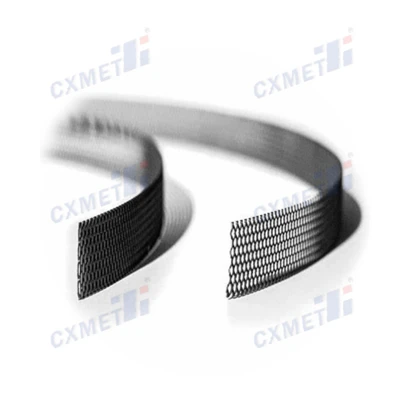
In addition, recycling and reusing platinum from spent anodes is also a viable cost – reduction strategy. By developing efficient recycling processes, the platinum can be recovered and reused, reducing the demand for newly mined platinum.
Titanium Framesets As a supplier of platinum titanium anodes, I am excited about these research trends. They not only offer opportunities for the development of better – performing and more cost – effective products but also open up new markets and applications. If you are interested in our platinum titanium anodes or want to discuss potential applications and research collaborations, please don’t hesitate to contact us for procurement and further discussions.
References
- Trasatti, S. (1980). Electrodes of Conductive Metallic Oxides. Part I: General Properties. Electrochimica Acta, 25(7), 733 – 745.
- Bard, A. J., & Faulkner, L. R. (2001). Electrochemical Methods: Fundamentals and Applications (2nd ed.). Wiley.
- Conway, B. E. (1999). Electrochemical Supercapacitors: Scientific Fundamentals and Technological Applications. Kluwer Academic/Plenum Publishers.
Shannxi CXMET Technology Co., Ltd.
As one of the most professional platinum titanium anode manufacturers and suppliers in China, we also support customized service. Please feel free to buy high-grade platinum titanium anode for sale here from our factory. Good service and quality products are available.
Address: 191 Integer Rd, 2nd StrLA 08219, P.R China.
E-mail: sales@cxmet.com
WebSite: https://www.cxmetanode.com/
