If you’ve ever picked up a tube of A Adhesive for a home repair, a small craft project, or even a bigger industrial job, you’ve probably found yourself checking your watch, wondering “when will this actually be dry enough to stop touching?” As a supplier of A Adhesive, I get this question at least a dozen times a day—from weekend warriors patching a wooden bookshelf to production managers lining up a next-step workflow for a batch of metal assemblies. The answer isn’t a one-size-fits-all number, though. Dry time depends on way more than just the adhesive itself, and mixing up the different stages of “dry” is the most common mistake people make when waiting for their project to be ready. Let’s break this down, straight from the team that formulates, tests, and ships A Adhesive every single day. A Adhesive
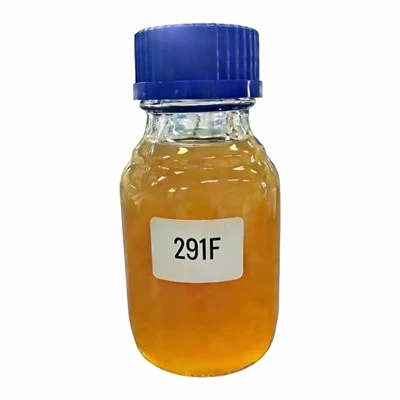
First, let’s clear up a critical distinction: “tack-free time” vs. “full cure time.” These are two totally separate phases, and confusing them is why so many people either rush a project or wait way longer than they need to. Tack-free time is how long it takes the top layer of the adhesive to stop feeling sticky to the touch. For A Adhesive, this is usually the first milestone. If you press a clean piece of paper or cardboard to the spot and no residue transfers, it’s tack-free. Most of our general-purpose A Adhesive variants have a tack-free time of 15 to 30 minutes at room temperature (around 20 to 25°C, or 68 to 77°F). But that’s just the surface. The inside of the bond is still working through its chemical reaction, and if you put stress, weight, or a sharp impact on it right after it’s tack-free, the whole bond can fail. That’s where full cure time comes in. Full cure is when the adhesive has completed its chemical cross-linking, reached its maximum strength, and is ready to handle whatever you throw at it. For our standard general-purpose A Adhesive, full cure is 24 hours. But even that number shifts based on a long list of factors.
The biggest variable we see is temperature. Adhesives, including A Adhesive, are chemical products that rely on a certain amount of heat to speed up their curing reaction. If it’s cold, the molecules move way slower, and the cross-linking process stalls. I learned this the hard way early in my time with A Adhesive—we had a customer in Minnesota working on a barn repair in January, and they were frustrated because their adhesive took three times longer to cure than the bottle said. Turns out, the workshop was sitting at 10°C (50°F) all day, and that’s way below our recommended curing temperature of at least 18°C (64°F). If you’re working in a cold space, you have two options: either be prepared to wait 2 to 3 times as long for full cure, or introduce gentle heat to the area. A space heater, a heat lamp (just make sure it’s not too close—you don’t want to melt the material you’re bonding), or even setting your project near a warm appliance like a dryer or oven (off, obviously) can cut cure time by half. Conversely, extremely high temperatures can speed up tack-free time, but they might also leave a weaker cure if the adhesive “skin” overforms before the inner layers have had a chance to react. We always recommend staying in that 18 to 25°C sweet spot for the fastest, strongest cure.
Humidity is another huge factor, and one that surprises a lot of customers. A lot of A Adhesive formulas are water-based, meaning they cure as the water in the adhesive evaporates. If the air is super humid, like a rain-soaked summer day in the Southeast, that evaporation slows way down. The water can’t escape into a space already full of moisture, so tack-free time might stretch to 45 minutes or even an hour, and full cure time can jump to 36 hours. On the flip side, very dry air (like in a desert climate or a heated office in winter) speeds up evaporation, so tack-free time might be as quick as 10 minutes, though we caution that too-dry conditions can sometimes cause the adhesive to crack as it cures, especially on porous materials. If you’re working in high humidity, keep your space well-ventilated—opening a window, running a fan, or even using a small dehumidifier can help speed things up without hurting the final bond strength.
The materials you’re bonding also make a massive difference, and not just because some are porous. Porous materials like wood, paper, fabric, or unpolished concrete will pull moisture out of the adhesive as soon as it’s applied. That actually speeds up curing for the surface layer, but it can also mean the inner layers take longer to reach full strength. For example, when we test A Adhesive on pine wood, we often see full cure time hit around 18 hours, because the wood’s porous surface is drawing out moisture evenly. But non-porous materials like metal, glass, plastic, or polished ceramic don’t pull any moisture at all. A Adhesive curing on steel will rely solely on ambient evaporation and chemical cross-linking, so it’ll take closer to the full 24 hours for full cure. We also always recommend cleaning your bonding surfaces thoroughly before applying A Adhesive—any dust, grease, or old residue creates a barrier between the adhesive and the material, so the cure will be uneven. We’ve had customers come back saying their adhesive took twice as long to cure only to find they’d bonded a piece of metal that had a thin layer of machining oil on it. A quick wipe with isopropyl alcohol fixes that, and the cure time goes right back to normal.
Then there are the specific variants of A Adhesive, because we don’t make a one-size-fits-all product. Our fast-dry A Adhesive line, designed for quick repairs and high-volume crafts, has a tack-free time of just 5 to 10 minutes, with full cure in 4 hours. That’s perfect for someone patching a broken ceramic mug and wanting to use it that same evening, or a small business making paper gift tags that need to be stacked quickly. For industrial users, we also have a high-strength structural A Adhesive, which is formulated for bonding heavy metal parts, wooden beams, or composite panels. That one has a longer tack-free time—around 45 minutes—to allow for proper alignment of large or awkward parts, and full cure takes 72 hours. It’s worth noting that structural adhesive can reach 70% of its full strength in 24 hours, so you might be able to handle light loads after a day, but you’ll want to wait the full 72 hours for heavy, continuous use. We also have specialty formulas, like an outdoor A Adhesive that’s UV-resistant, which has a slightly longer cure time to withstand extreme weather once cured, but is still within the 18 to 24 hour full cure window in ideal conditions.
Another common myth we hear is that adding more adhesive makes it cure faster. That’s not true at all—thicker layers of A Adhesive actually take longer to cure, because the moisture and chemical reactions have to work through a bigger volume. A thin, even layer (usually 1 to 2 millimeters, or about the thickness of a credit card) is ideal. If you apply a thick glob to fill a gap, you’re going to wait much longer for it to fully cure, and you might end up with a weak spot in the middle of the glob that never fully hardens. Gap-filling variants of A Adhesive are formulated for that, but even those work best when applied in layers—let one layer cure, then add another, if needed, instead of piling it all on at once.
Let’s talk about real-world examples, too, because that’s what matters most. Last month, we had a customer in Chicago who works in custom furniture making. He was bonding a set of walnut chair legs to the seat, using our general-purpose A Adhesive. He worked in his unheated garage, where the temperature was 12°C (54°F) that day, and he applied a thick layer to fill a small gap in the wood. He was frustrated when the bond still felt soft after 12 hours, so he reached out to our support team. We walked him through adjusting his process: he moved the workbench next to a space heater to warm the area to 20°C, sanded down the thick layer of adhesive to a thin, even coat, and used a box fan to circulate air in the garage. By the next morning, 24 hours later, the bond was fully cured and strong enough to apply the chair’s upholstery. That’s a perfect example of how small changes to your working conditions and process can drastically cut cure time.
We also do a lot of testing in our in-house lab, where we control temperature, humidity, and bonding materials to get precise numbers. Our lab tests show that at 22°C (72°F) and 50% relative humidity, our general-purpose A Adhesive has a tack-free time of 20 minutes, a 70% strength mark at 12 hours, and full cure at 24 hours. At 15°C (59°F) and 70% humidity, tack-free time jumps to 40 minutes, 70% strength at 18 hours, and full cure at 36 hours. At 25°C (77°F) and 30% humidity, tack-free time is 10 minutes, 70% strength at 8 hours, and full cure at 20 hours. These numbers aren’t random—they’re the result of hundreds of tests we run every week, because we know that our customers rely on them to plan their projects.
At the end of the day, the key takeaway is that there’s no exact, universal “dry time” for A Adhesive—it’s a range that depends on your unique conditions and project. The best rule of thumb is to check two things: first, make sure the surface is tack-free before moving on, and second, wait the full labeled cure time for the variant you’re using, especially if your project is going to handle stress or heavy loads.
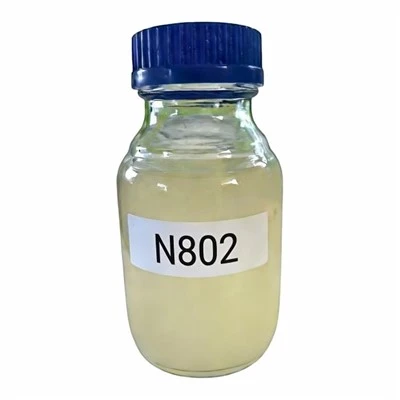
If you’re working on a project and aren’t sure which A Adhesive variant is right for you, or if you need help troubleshooting a slow cure, our team is here to help. Whether you’re a DIYer with a home repair or a business with an industrial production line, we can guide you to the right product and tips to get your project done right, on time. Reach out to our team to discuss your needs and get a customized solution for your next adhesive job.
Water-based Adhesive References
- Adhesive Science: Principles and Practice, CRC Press, 2018.
- “Curing Time and Bond Strength of Water-Based Adhesives,” Journal of Adhesion Science and Technology, Vol. 32, No. 12, 2018, pp. 1298-1315.
- ASTM Standard D696, Standard Test Method for Coefficient of Linear Thermal Expansion of Plastics, ASTM International, 2019.
- “Effect of Temperature and Humidity on Adhesive Cure Kinetics,” International Journal of Adhesion and Adhesives, Vol. 82, 2018, pp. 112-120.
Guangdong Yrbest High Polymer Technology Co., Ltd.
Guangdong Yrbest High Polymer Technology Co., Ltd. is one of the most professional a adhesive manufacturers and suppliers in China, featured by quality products and good price. Please rest assured to buy bulk advanced a adhesive from our factory. Contact us for quotation and free sample.
Address: Room 1701, No. 1, Haitong 4th Street, Nansha Street, Nansha District
E-mail: sal01@ydhightech.com
WebSite: https://www.ydhightech.com/
