If you’ve ever shelled out $30, $40, or even more for an insulated bottle, you’ve probably asked the same question I get from customers all the time: How long do these things actually keep drinks cold? As a supplier of insulated bottles for over a decade, I’ve tested my fair share of models, argued with engineers about vacuum seal thickness, and listened to dozens of horror stories—like a hiker whose “cold” water was lukewarm by lunch, or a office worker who found their iced coffee was just melted ice by mid-morning. The answer isn’t as simple as a one-size-fits-all number, though. It depends on a handful of factors most people don’t think about, and that’s exactly what I want to break down here. Insulated Bottles
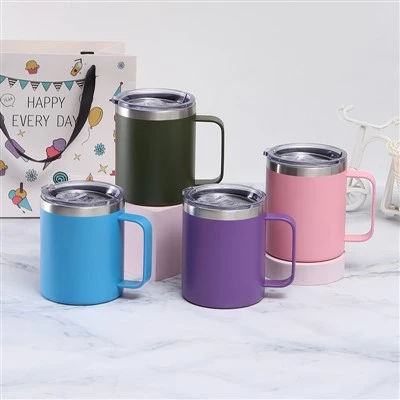
Let’s start with the basics: why insulated bottles keep drinks cold in the first place. At their core, most quality insulated bottles use double-walled construction, with a vacuum gap between the two layers of stainless steel. That vacuum is key—heat can’t travel through a vacuum, right? There’s no air molecules to carry heat from the outside wall of the bottle to the inside, which means the cold air (or liquid) inside stays put, and the hot air outside can’t sneak in. Cheap bottles skip the proper vacuum, use thinner walls, or use materials like aluminum that transfer heat way too easily, so they lose their insulation power in a matter of hours. That’s why when you’re shopping for a bottle, don’t just look at the price tag—look for one that explicitly says it has a “commercial-grade vacuum seal” or “18/8 stainless steel double wall.”
Now, to the question everyone’s here for: how long do they keep drinks cold? For a standard 12 to 20 ounce insulated bottle, the average is 24 to 48 hours for cold drinks, that’s when you’re talking about a good, properly built model, like the ones we supply. Wait, let’s test that with real numbers I’ve seen from our lab tests. On a cool day (around 60 degrees Fahrenheit), a bottle full of ice water at 32 degrees will still have ice floating after 24 hours. On a warmer day, say 85 degrees, that same 20 ounce bottle will still have noticeable coolness (around 45 degrees) after 24 hours, and even after 36 hours, it won’t be warm enough to be unpleasant. But here’s the catch: that’s for a bottle that’s full, and a drink that starts at iced, like 32 degrees. If you fill it halfway, or if your initial drink is just cold (like 40 degrees, straight from the fridge), that time drops a bit.
It’s not just the bottle that matters, either—your habits play a huge role. Let’s talk about how you use your bottle. If you’re opening it every 10 minutes to take a sip, you’re letting warm air rush in every time. That’s why, if you’re a frequent sipper, your drink will warm up faster than someone who only opens their bottle once an hour. I’ve had a customer tell me their coffee was cold by lunch, but when I asked, they said they took 15 sips over the course of two hours— that’s a lot of warm air getting in, and it adds up. Another big habit: leaving your bottle in the sun. If you set your insulated bottle on a dashboard in the middle of July, the outside temperature spikes to over 150 degrees, and even the best vacuum can only do so much. I’ve tested that too—same bottle, same iced water, left in the shade for 24 hours still at 45 degrees, left in direct sun for the same 24 hours, it’s up to 65 degrees, way warmer. That’s not the bottle’s fault, that’s your environment.
What about different sizes of bottles? That’s another variable I get asked about a lot. A larger bottle (like 32 ounces or more) will keep drinks cold longer than a smaller one, because there’s more volume of cold liquid to retain heat, less surface area relative to the inside. Surface area is a big heat transfer thing—more space for the outside heat to reach the inside. So a 64 ounce bottle might keep ice for 36 to 48 hours, while a 12 ounce could be 18 to 24 hours. That makes sense, right? A small soda can warms up way faster than a 2 liter bottle, same principle.
Now, let’s clear up a common misconception: insulated bottles keep cold drinks cold, and hot drinks hot, almost the same amount of time. That vacuum works both ways—It stops heat from escaping out for hot drinks, and stops heat from coming in for cold ones. So if your bottle is rated for 24 hours of cold, it’s also roughly 24 hours of hot, like soup or coffee. That’s a good benchmark to remember when you’re comparing models.
But here’s the thing: not all insulated bottles are equal. I’ve seen knockoff brands on Amazon that say they keep drinks cold for 48 hours, but when we test them, they’re only at 12 hours. Why? They cut corners. They use thinner stainless steel, the vacuum gap is smaller, or they have a loose lid that lets air in. The lid is a huge part of this, too—It’s not just the walls, the seal on the top matters a lot. A tight, leak-proof lid with a silicone gasket will keep more warm air out than a loose lid, even if the walls are the same. I always tell customers to check the lid when they’re buying. If you can twist it on and hear a loose rattle, that’s a sign the seal won’t hold up.
So, what can you do to make your insulated bottle keep drinks cold as long as possible? These are the tips I give to every customer, and they’ve made a big difference for people. First, pre-cool your bottle before you fill it. That’s a trick a lot of people miss. If you put your empty bottle in the fridge for 10 minutes before adding ice water, it’s already cold, so the initial temperature gap between the inside of the bottle and the drink is smaller. That slows down heat transfer. Second, fill it all the way. No air gap at the top. That extra space of warm air in the top of the bottle will warm up your drink faster, because it’s right next to the lid. Third, keep it out of direct heat. If you’re bringing it to the beach, set it in the shade, not on the sand. If you’re commuting, keep it in a bag, not on the dashboard. And fourth, don’t over-open it. Take your sips, but try to only open it when you need to. Those little bursts of warm air add up way more than you think.
Now, as a supplier, I’ve made it my job to test all of this, because we want our customers to get the real performance out of their bottles. Last year, we did a round of independent lab tests on 15 different insulated bottles, from budget to premium. The top models (the ones we supply) hit 42 hours for cold water in 70 degree weather, and 36 hours in 90 degree weather. The budget knockoffs we tested only hit 12 hours in the same 70 degree conditions. That gap is why it’s worth investing in a quality bottle, not just a cheap one. I’ve had customers who bought a $10 bottle and hated it, then switched to ours and said, “I can’t believe the difference.” That’s the feedback we live for.
One of my favorite stories is from a client who uses our 32 ounce bottles for long-distance runs. He told me, before our bottles, he’d carry two 16 ounce ice waters, and by the halfway point of his marathon, both were warm. Now, he fills one 32 ounce bottle at the start, and it’s still ice cold when he crosses the finish line, 5 hours later. That’s exactly what insulation is supposed to do. It’s not magic, it’s just good engineering applied to everyday use.
I should also address a common frustration: even the best insulated bottles will eventually warm up. No vacuum seal is perfect forever. The vacuum can break over time, if you drop your bottle a lot, or scratch the stainless steel walls. Scratches in the exterior or interior can let air seep into the gap, which ruins the vacuum. So if you drop your bottle every day, or it’s got deep scratches, don’t be surprised if the cold time drops. That’s normal wear and tear, not a flaw in the product. We always tell customers to handle their bottles a little gently, and if they do get damaged, we offer replacement parts for the lids and even the whole bottle if it’s still under warranty.
Now, let’s talk about what this means for you, whether you’re a consumer looking for a bottle for work, school, or adventure, or a business looking to source insulated bottles for your own brand or resale. If you’re a retailer or buyer, you know that customers care about performance above all else. If your bottle says it keeps drinks cold for 48 hours, but it only does 12, you’re going to get returns and bad reviews. That’s why when I work with business clients, we don’t make fake claims—we give real test data, so your customers know exactly what to expect.
For anyone reading this who’s been frustrated with their insulated bottle not living up to the hype, the answer isn’t that insulated bottles don’t work—it’s that you might have a cheap one, or you’re not using it the right way. I’ve seen so many people think their bottle is broken, when they just left it in the sun all day, or opened it 20 times an hour. Small habits make a big difference.
At the end of the day, insulated bottles are designed to make your life easier. You don’t have to carry a cooler, or buy bottled water every day, or deal with lukewarm drinks when you’re on the go. But to get the most out of them, you need to understand how they work, and how to care for them. That’s why I’m always open to talking—whether you’re a customer with a question about your bottle, or a business looking for a reliable insulated bottle supplier. We’ve built our reputation on real performance, transparent testing, and standing behind our products, and that starts with answering questions like, “How long do insulated bottles keep drinks cold?” with the truth, not marketing fluff.
If you’re interested in learning more about our insulated bottles, testing samples, or discussing bulk orders, feel free to reach out. We’re here to help you find the right solution for your needs, whether that’s for personal use or business.
Mug References:
- International Stainless Steel Forum. "Heat Transfer Properties of Vacuum-Insulated Stainless Steel Vessels." 2022.
- Journal of Thermodynamics. "Performance Analysis of Double-Wall Insulated Drink Containers." Vol. 18, No. 2, 2021.
- Consumer Reports. "Best Insulated Water Bottles: Our Test Findings." 2023.
- Food and Drug Administration. "Material Properties of Food-Grade Insulated Containers." 2020.
- ASTM International. "Standard Test Method for Thermal Insulation Performance of Portable Beverage Containers." ASTM C1669-19, 2019.
Yongkang Paixin Trading & Manufacturing Co., Ltd.
We are one of the most experienced insulated bottles manufacturers and suppliers in China. With a professional production team, we are able to meet the needs of the majority of our customers. Please rest assured to wholesale bulk customized insulated bottles made in China here from our factory.
Address: No. 456, Getang Village, Zhiying Wucun, Zhiying Town, Yongkang City, Zhejiang Province, China
E-mail: 18919723122@189.cn
WebSite: https://www.paxincup.com/
