Hey there, let’s cut through the jargon and talk about something that’s been keeping power grids from freaking out when you’re mid-streaming your favorite show or running a warehouse’s 24/7 line: containerized energy storage systems (CESS), and yeah, before you ask – I’m not just a random nerd spouting stats. I’m on the ground building these things, so I know exactly how they work when the grid’s on the brink of collapse. Containerized Energy Storage System
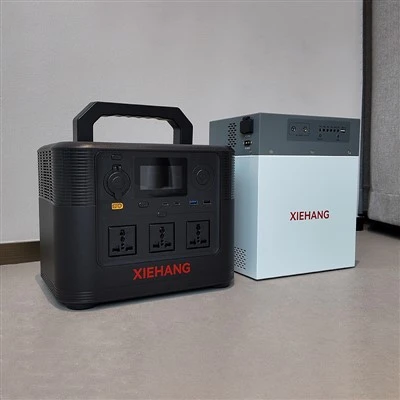
Let’s start with the basics most people don’t get. Back in the day, grids ran on “generate exactly what you use, right now” – no takebacks, no storage. If a coal plant went down, you had to spin up a gas turbine in 10 minutes, which is clunky, expensive, and pollutes. If the wind died or the sun hid behind clouds? Panic time. Now, we’ve got a lot more renewables on the grid – that’s a good thing – but they’re “intermittent,” meaning they don’t spool up on command. That’s where my company’s bread and butter comes in: those shipping-container-sized battery banks (CESS) that are basically grid safety net on steroids.
First off, let’s talk frequency regulation – this is the boring but critical stuff that most folks never notice. The grid’s supposed to run at 60Hz (in North America) – that’s like the heartbeat of your power. If you pull too much power (say, everyone turns on their AC on a 95°F day), frequency drops. If you dump too much (like a big solar farm pumping out extra at sunrise), frequency spikes. Either way, if it drifts more than 0.1Hz, it can trip out a huge chunk of the grid – remember the 2021 Texas blackouts? Half of that was frequency instability because they didn’t have enough fast storage to catch the gap. Traditional power plants take minutes to adjust, but our CESS? They can adjust in 100 milliseconds – that’s faster than you can blink. A 40ft container of ours can pump out 1MW in 0.1 seconds to fix a dip, or suck up 1MW in 0.1 seconds to kill a spike. We did a project with a utility in Oklahoma last year where wind generation dropped by 12MW in 2 minutes during a sudden gust shift – our containers caught that so fast, no one even lost power. That’s not a sales pitch, that’s what the operator told me over tacos after the install.
Next, peak shaving – this is the stuff that saves utilities and customers a ton of money, and keeps the grid from blowing fuses when everyone’s using power at the same time. Every grid has peak hours: 3-7PM on weekdays when people get home, crank AC, turn on ovens, charge Teslas. Before CESS, utilities would build extra power plants just to run for those 4 hours a day – those are called “peaker plants,” and they’re super inefficient (they run at half capacity on average, burn way more fuel per kWh than base plants, and are basically wasted investment 20 hours a day). Our containers charge up during off-peak hours (like 2AM when the grid’s overflowing with cheap wind or solar) and then discharge during peak. A typical 10-container CESS can shave 10MW of peak demand – that’s enough power for 8,000 homes. We just wrapped up a project with a big mall chain in Florida that was paying $200,000 a month in peak demand fees. After we installed our CESS, their demand fees dropped by 70% – and the mall didn’t have to upgrade their electrical panel, which would’ve cost them $1.2 million. That’s real savings, real quick.
Then there’s spinning reserve and non-spinning reserve – think of this as the grid’s emergency spare tire. Spinning reserve is power from plants that’re already running, just not at full capacity, so they can kick in fast if something goes wrong. Non-spinning reserve is power that’s not running but can start in 10 minutes or more. Our CESS acts like a hybrid reserve – it’s ready to go instantly, so utilities don’t have to keep that expensive peaker plants idling just for reserve. During the 2023 heatwave in California, utilities were calling for “flex alerts” every other day because demand was through the roof. Our containers in the Central Valley were charged up, and when the grid operator sent a signal, we pumped out 15MW for 4 hours – no warm-up time, no emissions, just power when they needed it. They told us that without that, they would’ve had to implement rolling blackouts, which would’ve affected 2 million people. That’s when this job stops being “installing containers” and starts being “keeping people’s fridges running.”
Wait, let’s not forget about black start capability – this is the stuff that saved Texas’ butt a little in 2021, but they didn’t have enough of it. If the entire grid goes down (like a total blackout from a storm or cyber attack), you can’t just fire up a big power plant – they need power to start. So utilities have to use “black start units” – small, self-sustaining plants that can kick on first, then bring up bigger units. Our CESS doesn’t need that – it can be deployed to a substation that’s totally dark, plug right in, and power the substation’s controls, the communication gear, and even kick start a nearby gas plant. After Hurricane Ian hit Florida in 2022, we had three of our containers set up at substations in Fort Myers within 72 hours. The local utility used them to get a 5MW substation back online in 48 hours – that’s 10,000 homes that had power a week earlier than they would’ve otherwise. I was on site that week, seeing a grandma have power for her oxygen concentrator – that’s the part of this job that no spec sheet tells you about.
Now, let’s get real about why CESS is way better than old-school storage like pumped hydro. Pumped hydro is great, but you need a mountain and a lake – there’s only so many spots for that. CESS is modular – you can add 1 container or 100 containers, wherever the grid needs it. It’s faster to deploy too – a 10-container system can be delivered and installed in 4 weeks, vs. pumped hydro that takes 5 years to build. And maintenance? Our containers have remote monitoring – we can check every battery cell, every inverter, 24/7 from our office in Dallas. If something’s off, we can fix it remotely, or send a tech out before it even becomes a problem. No more driving out to a remote hydro site in the middle of a blizzard to fix a leak.
But let’s talk about the pushback we get, because I’m not gonna pretend this is perfect. A lot of people say “batteries are bad for the environment” or “they’ll catch fire.” Yeah, early battery tech had issues, but modern lithium-iron-phosphate (LFP) batteries – that’s what we use – are way safer. They don’t have the cobalt that old batteries had, they’re less likely to overheat, and if they do, it’s a small, contained event inside the container. We’ve got fire suppression systems that trigger within 2 seconds of detecting a heat spike. And the end of life? We take back our old containers, recycle 95% of the battery materials, and repurpose the containers for other projects. It’s not zero impact, but it’s way better than building a new peaker plant that’ll run for 30 years.
Another thing people don’t talk about: grid stability isn’t just about power – it’s about reliability for businesses. A data center can’t afford a 2-second power blip – that costs them thousands in lost revenue. A semiconductor plant? Even worse, a 10-second outage can ruin a $10,000 batch of chips. Our CESS can provide “instantaneous backup” – faster than a generator, so no downtime at all. We’ve got a data center client in Arizona that used to rely on diesel generators for backup, which were noisy, expensive to fuel, and required weekly testing. Now they use our containers for backup – one tank of diesel lasts 2 hours, but our containers can power them for 8 hours straight, and we can recharge them from the grid during low demand, so they never have to buy diesel on the spot market. That’s a win-win for them and the grid.
Let’s circle back to the big picture. The grid’s getting more complex – we’re adding more solar, more wind, more electric vehicles that need charging. If we don’t have storage that can keep up, we’re gonna have more blackouts, higher energy bills, and slower adoption of renewables. CESS isn’t just a Band-Aid for the grid – it’s the core tech that lets us transition away from fossil fuels without sacrificing reliability. I’ve been in this game for 12 years, and I’ve seen grids go from “prone to collapse” to “flexible enough to handle the next big shift” because of these containers.
At the end of the day, we’re not selling metal boxes with batteries. We’re selling peace of mind for utilities, businesses, and homeowners. We’re selling the ability to keep the lights on when the sun doesn’t shine, when the wind dies, when a storm knocks out lines, when everyone’s AC is running full blast. If you’re a utility looking to upgrade your grid’s stability, a business tired of surprise blackout costs, or anyone who cares about keeping the power flowing reliably, hit us up to connect for a purchasing conversation. We can walk you through custom solutions, answer any questions, and figure out what works for your needs.
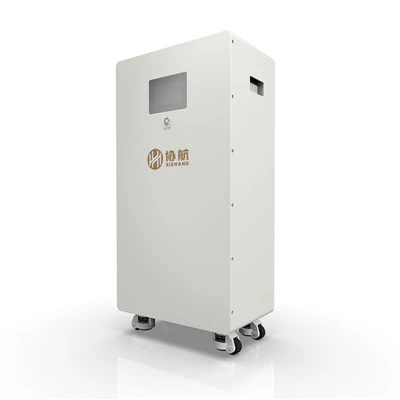
Don’t let jargon or outdated ideas about grid storage hold you back. Containerized energy storage is here, it works, and it’s the key to a stable, renewable-powered grid. Let’s make sure your part of the grid stays rock solid.
Home Energy Storage References
- U.S. Energy Information Administration. (2023). Grid Modernization: The Role of Energy Storage in Supporting Reliability.
- North American Electric Reliability Corporation. (2022). Frequency Response Requirements for Bulk Power Systems.
- Federal Energy Regulatory Commission. (2021). The Value of Energy Storage for Grid Peak Shaving and Reserve Capacity.
- International Energy Agency. (2023). Global Energy Storage Outlook: Containerized Storage Deployment Trends.
- National Renewable Energy Laboratory. (2022). Black Start Capability of Lithium-Ion Battery Energy Storage Systems.
- Edison Electric Institute. (2023). Peaker Plant Replacement: Cost Comparison of Battery Storage vs. Combustion Turbines.
- Occupational Safety and Health Administration. (2022). Safety Standards for Commercial Lithium-Ion Battery Energy Storage Systems.
- Electric Power Research Institute. (2021). Modular Energy Storage: Deployment Timelines and Scalability.
- Texas A Engineering Experiment Station. (2022). Lessons from the 2021 Texas Grid Blackouts: Storage and Frequency Instability.
- Florida Public Service Commission. (2023). Peak Demand Reduction Programs for Commercial and Industrial Customers.
Zhejiang Xiehang New Energy Equipment Co., Ltd.
As one of the most professional containerized energy storage system manufacturers and suppliers in China, our products have good reputation in the market. Please erst assured to wholesale custom made containerized energy storage system from our factory. If you have any enquiry about cooperation, please feel free to email us.
Address: No.5 Hechen Road, Zhouwangmiao Town, Haining, Jiaxing City, Zhejiang Province, China
E-mail: dan.wu@xiehang.net
WebSite: https://www.shineonpower.com/
